
Incense Box with Cover
Unknown Artist
1820
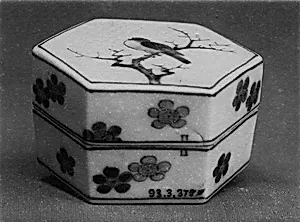
Medium
White porcelain decorated with blue under the glaze (Hirado ware)
Dimensions
H. 2 1/2 in. (6.4 cm)
Classification
Ceramics
Culture & Period
Japan · Edo period (1615–1868)
Department
Asian Art
Museum
Metropolitan Museum of Art, New York, NY
Credit
Gift of Charles Stewart Smith, 1893
Accession Number
93.3.379a, b
Rights
Public Domain
Tags
Art Historical Context
This delicate **Incense Box with Cover crafted in 1820 during Japan's Edo period (1615–1868), exemplifies the refined artistry of Hirado ware Nagasaki. Standing just 2½ inches (6.4 cm) tall, this porcelain vessel is adorned with intricate blue underglaze decorations featuring and flowers—motifs evoking nature's and seasonal beauty, common in Japanese aesthetics. underglaze technique, where cobalt blue pigment is applied before firing, ensures the vivid designs remain unfaded, showcasing the kilns' mastery of porcelain translucency and durability. Hirado ware, produced on the remote Hirado Island, gained fame in the 19th century for its export-quality fineness, blending Japanese ingenuity with influences from Chinese blue-and-white porcelain. Incense boxes like this *kōgō* were essential household items, used to store fragrant incense for purification rituals, tea ceremonies, or perfuming kimonos, reflecting Edo society's appreciation for understated elegance amid urbanization and prosperity. A generous gift to the Metropolitan Museum of Art in 1893 by Charles Stewart Smith, this piece invites visitors to ponder the sensory rituals of daily life in feudal Japan, where even small objects embodied philosophical depth and technical virtuosity.