
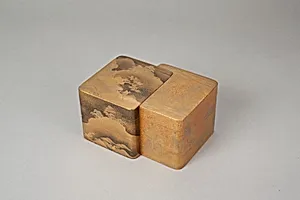
Incense Box with Designs of Pines Along the Shore and Young Pines
Unknown Artist
late 19th century
Medium
Gold maki-e on black lacquer
Dimensions
H. 2 1/4 in. (5.7 cm); W. 3 1/8 in. (7.9 cm); D. 4 1/8 in. (10.5 cm)
Classification
Lacquer
Culture & Period
Japan · Edo period (1615–1868)
Department
Asian Art
Museum
Metropolitan Museum of Art, New York, NY
Credit
Bequest of Stephen Whitney Phoenix, 1881
Accession Number
81.1.275
Rights
Public Domain
Tags
Art Historical Context
This exquisite incense box from Japan's Edo period (1615–1868) showcases the mastery of lacquerware, a craft that reached new heights during this era of peace and cultural refinement. Crafted in the late 19th century by an unknown artist, the small rectangular box (just over 2 inches high and 4 inches deep) features intricate gold *maki-e* designs—meaning "sprinkled picture"—on a glossy black lacquer ground. Delicate pines along a shore and young saplings evoke the serene beauty of Japan's natural landscapes, rendered with powdered gold meticulously applied over lacquer adhesive and multiple polished layers for a luminous, jewel-like effect. *Maki-e* technique, perfected in the Edo period, transformed everyday objects into art treasures, often used in tea ceremonies or for storing fragrant incense. These boxes were prized by samurai and merchants alike, symbolizing refined taste and harmony with nature. Pines, enduring symbols of longevity and resilience in Japanese culture—able to thrive against coastal winds—add poetic depth, inviting contemplation of impermanence and strength. Housed in the Metropolitan Museum of Art's Asian Art Department through the bequest of Stephen Whitney Phoenix in 1881, this piece offers a window into Edo Japan's artistic ingenuity, where functionality met profound elegance.