
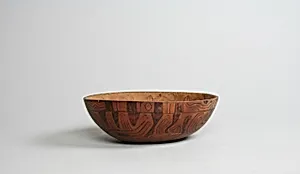
Incised and Pyroengraved Bowl with Monkeys
Unknown Artist
5th–4th century BCE
Medium
Ceramic, metallic specs
Dimensions
H. 1 3/4 × Diam. 5 3/8 in. (4.4 × 13.7 cm)
Classification
Ceramics-Containers
Culture
Paracas
Department
Arts of Africa, Oceania, and the Americas
Museum
Metropolitan Museum of Art, New York, NY
Credit
Gift of Nathan Cummings, 1963
Accession Number
63.232.102
Rights
Public Domain
Tags
Art Historical Context
This delicate ceramic bowl, crafted by an unknown Paracas artist around the 5th–4th century BCE, hails from the ancient Paracas culture of Peru's southern coast. Dating to the early phases of this pre-Incan society (ca. 800–100 BCE), the vessel reflects the Paracas people's mastery of pottery during a time when they were renowned for elaborate burials and finely decorated grave goods. Part of the Metropolitan Museum of Art's collection 1963, thanks to a gift from Nathan Cummings, it measures just 1¾ inches high and 5⅜ inches in diameter—perfectly sized for daily use or ritual offerings. The bowl's surface is adorned with lively monkeys, incised (cut into the clay before firing) and pyroengraved (decorated with hot tools after firing for a subtle, textured effect), and enhanced by metallic specks that catch the light, suggesting imitation of precious metals. Monkeys, a recurring motif in Paracas art, likely held symbolic meaning tied to the natural world, fertility, or shamanistic beliefs, evoking the vibrant fauna of Peru's coastal deserts. These techniques highlight the culture's innovative ceramics, bridging utility and artistry in a society celebrated for textiles but equally skilled in clay. Visitors will appreciate how this small treasure captures the Paracas' sophisticated worldview, where everyday objects pulsed with spiritual energy.