
Inhuldiging van Willem V als markies van Veere en Vlissingen
Medium
striking (metalworking)
Dimensions
2.6; 7.22
Rights
Public Domain
About this artwork
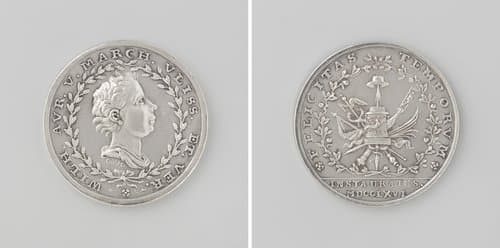
Zilveren penning. Voorzijde: borststuk jongeman binnen twee samengebonden lauwertakken en omschrift. Keerzijde: versierd altaar met daarop vrijheidshoed op speer, en daarachter gekruist vlag, Mercuriusstaf, scepter en palmtak binnen krans van oranjetakken en omschrift; afsnede: datering
Art Historical Context
**Inhuldiging van Willem V markies van Veere Vlissingen** (1766) is a delicate silver medal crafted by Dutch medalist Gerrit van Moelingen (), measuring just 2.6 cm in diameter weighing 7.22. Struck in silver—a technique that allowed for intricate, high-relief details—this small artwork celebrates the inauguration of William V, Prince of Orange as Marquis of Veere and Vlingen, historic titles in Zeeland, Netherlands. Produced during a pivotal time in the Dutch Republic, when the House of Orange sought to bolster its influence amid political tensions, the medal served as both a personal honor and subtle propaganda. The obverse features a youthful bust of William V framed by tied laurel branches, symbols of victory and nobility, encircled by an inscription. The reverse depicts a ornate altar bearing a liberty cap atop a spear—evoking freedom and republican ideals—flanked by a crossed flag, Mercury's caduceus (for commerce), a scepter (authority), and a palm branch (triumph), all within a wreath of orange boughs nodding to the Orange-Nassau dynasty. The date appears in the exergue below. As 18th-century medal art, this piece exemplifies the era's mastery of miniature metalworking, blending portraiture, heraldry, and symbolism to immortalize key moments. Visitors will appreciate its role in Dutch history, bridging Enlightenment ideals with monarchical resurgence.