
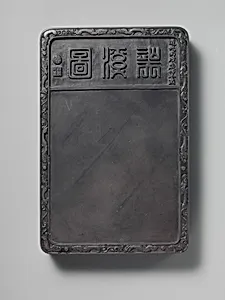
清 端溪圖端硯|Inkstone with Topographical Map of Duanxi
Unknown Artist
19th century
Medium
Duanxi slate
Dimensions
H. 8 1/8 in. (20.6 cm); W. 5 3/8 in. (13.7 cm); D. 1/8 in. (2.9 cm)
Classification
Inkstone
Culture & Period
China · Qing dynasty (1644–1911)
Department
Asian Art
Museum
Metropolitan Museum of Art, New York, NY
Credit
Gift of Florence and Herbert Irving, 2015
Accession Number
2015.500.6.19
Rights
Public Domain
Tags
Art Historical Context
This exquisite inkstone, crafted in the 19th century during China's Qing dynasty (16441911), hails from the renowned Duanxi region in Guangdong province, famous for producing the finest slate inkstones. Carved from premium Duanxi slate—prized for its fine grain, resonant "dragon cry" sound when rubbed, and ability to hold ink without drying—this rectangular piece measures a portable 8⅛ × 5⅜ inches (20.6 × 13.7 cm). Its shallow depth of just ⅛ inch (2.9 cm) reflects the precision of traditional stoneworking, making it a scholar's essential tool for grinding ink sticks in calligraphy and painting. What sets this inkstone apart is its intricate topographical map of Duanxi itself, rendered in delicate relief with undulating mountains, winding rivers, and boats navigating the landscape. This artistic motif celebrates the stone's birthplace, blending functionality with topography as a miniature homage to the quarries' natural beauty. Inkstones like this were coveted status symbols among Qing literati, embodying Confucian ideals of refinement and harmony with nature. Today, this gift to the Metropolitan Museum of Art from Florence and Herbert Irving invites us to appreciate the fusion of utility and artistry in Chinese material culture, where even a writing implement becomes a poetic landscape.