
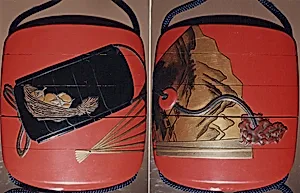
印籠扇面蒔絵印籠|Inrō with Inrō and Fan
late 18th century
Medium
Four cases; lacquered wood with gold, black, red lacquer takamaki-e, hiramaki-e, tgidashimaki-e on red lacquer ground; Netsuke: carved ivory; beans; Ojime: metal bead with insects
Dimensions
H. 2 15/16 in. (7.5 cm); W. 2 1/2in. (6.3 cm); D. 1 in. (2.5 cm)
Classification
Inrō
Culture & Period
Japan · Edo period (1615–1868)
Department
Asian Art
Museum
Metropolitan Museum of Art, New York, NY
Credit
Rogers Fund, 1913
Accession Number
13.67.26
Rights
Public Domain
Tags
Art Historical Context
This exquisite *Inrō with Inrō and Fan*, crafted by Koma Kyhaku V in the 18th century during Japan's Edo period (1615–1868), exemplifies the pinnacle of lacquer artistry. Inrō were compact, multi-case containers worn suspended from a kimono sash by samurai, merchants, and dandies to hold medicines, seals, or tobacco. Adorned with a carved ivory netsuke shaped like beans and a metal ojime bead featuring insects, this piece measures just 2 15/16 inches high, showcasing the era's fascination with portable luxury and intricate personal accessories. The four lacquered wood cases gleam on a vibrant red ground, decorated with gold, black, and red lacquer using advanced *makie* techniques: raised *takamaki-e* for bold relief, flat *hiramaki-e* for smooth elegance, and embossed *tsashi-maki-e* for textured depth. The design cleverly depicts an inrō and fan—mirroring the object itself—highlighting themes of self-reference and everyday elegance popular among lacquer masters like the Koma family lineage. Acquired through the Rogers Fund in 1913, this Metropolitan Museum of Art treasure reflects Edo Japan's refined craftsmanship, where lacquerware transcended utility to become wearable art, blending functionality with poetic sophistication for the discerning collector.