
Inscribed Reliquary, Donated by King Indravarman
Unknown Artist
5–6 CE
Medium
Schist
Dimensions
Diam. 3 5/8 in. (9.2 cm)
Classification
Sculpture
Culture
Pakistan (ancient region of Gandhara, Bajaur)
Department
Asian Art
Museum
Metropolitan Museum of Art, New York, NY
Credit
Samuel Eilenberg Collection, Gift of Samuel Eilenberg, 1987
Accession Number
1987.142.70a, b
Rights
Public Domain
Tags
Art Historical Context
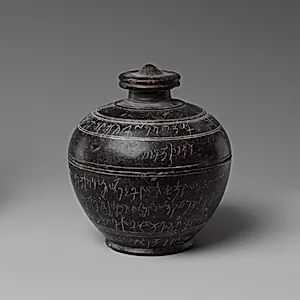
This exquisite schist reliquary, in the ancient region of Gandhara (modern-day Bajaur, Pakistan) during the 5th–6th centuries CE, exemplifies the refined stone-carving traditions of South Asian Buddhist art. Small enough to hold in the palm of one’s hand—measuring just 3 5/8 inches in diameter—the cylindrical vessel was designed to contain sacred relics, often fragments of bone or other remains associated with revered figures. Its smooth, cool surface and precise carving reflect the durability and fine grain of schist, a stone favored by Gandharan sculptors for both monumental and portable works. What makes this piece particularly compelling is its inscription, which records its donation by King Indravarman. Such royal patronage highlights the deep intertwining of political power and religious devotion in early Gandharan society, where rulers commissioned objects to earn spiritual merit and legitimize their authority. The reliquary’s modest scale suggests it may have served in personal or monastic settings rather than grand public shrines, offering visitors a tangible connection to the intimate devotional practices of the period. Housed in the Metropolitan Museum of Art’s Asian Art collection as part of the Samuel Eilenberg gift, this artifact invites us to appreciate how even the smallest objects carried profound cultural and spiritual weight across centuries.