
Italiaanse portretten
1649 - 1651
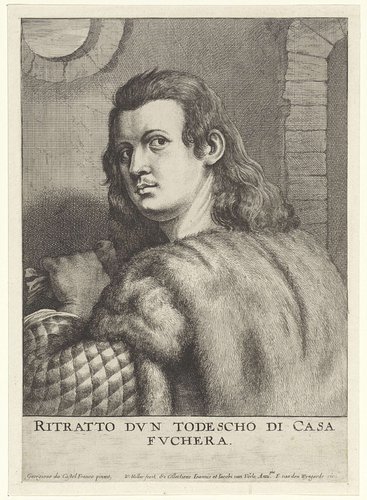
Medium
etching
Dimensions
177; 252
Rights
Public Domain
About this artwork
verzamelaarsmerk, verso, gestempeld: Lugt 240
Art Historical Context
Wenceslaus Hollar's *Italiaanse portretten* (Italianraits), created between 1649 and1651, is a fine example of the Bohemian artist's mastery in etching. Measuring 252 × 177 mm, this print captures the elegance of Italian portraiture during Hollar's productive Antwerp period, a time when he fled England's Civil War and immersed himself in the vibrant printmaking scene of the Spanish Netherlands. Hollar, renowned for his meticulous reproductive prints after paintings by masters like Van Dyck, likely drew from Italian influences to evoke the grandeur of Renaissance and Baroque portrait traditions. Etching, Hollar's preferred medium, allowed for delicate lines and tonal subtleties through acid-etched copper plates, making it ideal for replicating the nuanced expressions and textures of original paintings. This technique democratized access to elite portraiture, bridging Northern European audiences with Italy's artistic legacy. The work's verso bears a collector's mark (Lugt 240), underscoring its provenance and appeal to connoisseurs. As a snapshot of 17th-century cultural exchange, *Italiaanse portretten* highlights Hollar's role in disseminating Italian sophistication across Europe, inviting viewers to ponder the faces of a distant artistic heritage.
About the Artist
Wenceslaus Hollar · 1607–1677
Wenceslaus Hollar (1607-1677) was a prolific Bohemian etcher who became one of the most accomplished printmakers of the seventeenth century. Born in Prague, he trained under Matthäus Merian in Frankfurt before entering the service of Thomas Howard, Earl of Arundel, in 1636. Hollar spent most of his career in England, where he produced approximately 2,740 etchings documenting an extraordinary range...