
Iwai Hanshirō IV
ca. 1780
Medium
Woodblock print (nishiki-e); ink and color on paper
Dimensions
11 3/4 x 5 1/2 in. (29.8 x 14 cm)
Classification
Prints
Culture & Period
Japan · Edo period (1615–1868)
Department
Asian Art
Museum
Metropolitan Museum of Art, New York, NY
Credit
The Howard Mansfield Collection, Purchase, Rogers Fund, 1936
Accession Number
JP2697
Rights
Public Domain
Tags
Art Historical Context
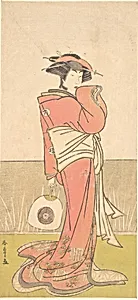
In the lively world of 18th-century Japanese theater, Katsukawa Shunshō'sblock print *Iwai Hanshirō IV* (ca. 1780) captures the charisma of one of kabuki's celebrated onnagata actors. Shunshō, a master of the ukiyo-e ("pictures of the floating world") tradition and founder of the Katsukawa school specialized in yakusha-e—dynamic portraits of kabuki performers. This nishiki-e, or "brocade picture," showcases Iwai Hanshirō IV, renowned for his graceful female roles, likely posed with a fan, evoking the drama and elegance of the stage. Printed in vibrant inks and colors on paper using intricate woodblock techniques, this narrow hosoban-format print (11 3/4 x 5 1/2 in.) exemplifies the Edo period's (1615–1868) printing innovations. Multiple woodblocks allowed for rich layering of pigments, bringing unprecedented realism and vividness to mass-produced art. These affordable prints democratized celebrity culture, adorning homes and fueling fascination with theater stars amid urban Japan's booming entertainment scene. Housed in the Metropolitan Museum of Art's Asian Art collection, this piece from The Howard Mansfield Collection highlights ukiyo-e's cultural role in preserving fleeting moments of beauty and performance, bridging art and everyday life in historic Japan.
About the Artist
Katsukawa Shunshō 勝川春章 (Japanese) · 1726 –1792
Japanese, 1726–1792