
Jacques Callot
1551 to 1600
Medium
etching
Classification
Department
CG-E
Museum
National Gallery of Art, Washington, D.C.
Credit
R.L. Baumfeld Collection
Accession Number
1969.15.921
Rights
Public Domain
Art Historical Context
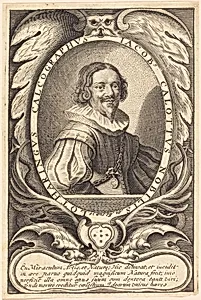
This delicate etching, titled *Jacquesot*, offers a striking portrait of the celebrated French printmaker Jacques Call (1592–1635), crafted by Balthasar Monnet after an original design by Michel Lasne. sometime between 1551 and1600, it exemplifies collaborative spirit of 17th European printmaking, where reproductive prints allowed masterworks to reach wider audiences through skilled engravers like Moncornet and Las, both prominent French artists known for their intricate line work. Etching, the medium here, was a revolutionary technique in this era: artists drew into a wax ground on a metal plate, immersing it in acid to "bite" fine lines, yielding rich tonal effects impossible with earlier woodcuts. This print's precision captures Callot's thoughtful gaze and period attire, highlighting his legacy as a Baroque innovator whose own etchings—depicting wars, festivals, and the marginalized—bridged realism and drama. Housed in the National Gallery of Art's R.L. Baumfeld Collection (Department CG-E), it invites visitors to appreciate how such portraits preserved the faces behind printmaking's golden age, making artistic genius accessible across centuries.