
Jagging Wheel
Unknown Artist
1800–1900
Medium
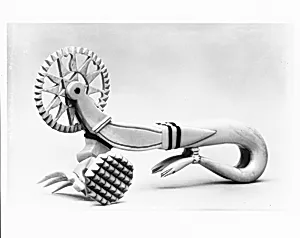
Walrus ivory
Dimensions
H. 8 5/8 in. (21.9 cm)
Classification
Jagging wheel
Department
The American Wing
Museum
Metropolitan Museum of Art, New York, NY
Credit
The Sylmaris Collection, Gift of George Coe Graves, 1930
Accession Number
30.120.145
Rights
Public Domain
Art Historical Context
Nestled in The Metropolitan Museum of Art's American Wing, the *Jagging Wheel* is a charming example of 19th-century folk art crafted from walrus ivory. Standing at 8 5/8 inches (21.9 cm) tall, this delicate tool—used historically to crimp or score pastry dough—was likely fashioned by an unknown American artisan, possibly a whaler or sailor. The creamy, durable walrus ivory, sourced from Arctic waters, speaks to the resourcefulness of maritime communities during the 1800–1900 period, when ivory carving became a popular pastime aboard ships. Carved with precision, the wheel's jagged edge and ergonomic handle showcase the scrimshaw-like techniques of the era: fine incisions and smooth polishing that highlight the medium's natural translucency and strength. Walrus ivory, tougher than whalebone, allowed for intricate detailing without cracking, making it ideal for both functional kitchen utensils and decorative objects. This piece, gifted through The Sylmaris Collection in 1930, embodies the cultural fusion of utility and artistry in American everyday life. It offers a window into the whaling industry's heyday, where sailors transformed exotic materials into treasured heirlooms, blending practicality with personal expression. A testament to anonymous creativity, it invites visitors to appreciate the hidden stories etched into humble tools.