
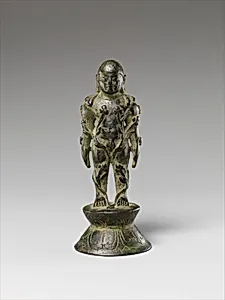
Jain Siddha Bahubali, Entwined with Forest Vines
Unknown Artist
late 6th–7th century
Medium
Copper alloy
Dimensions
H. 4 3/8 in. (11.1 cm)
Classification
Sculpture
Culture & Period
India (Karnataka) · Chalukyan period
Department
Asian Art
Museum
Metropolitan Museum of Art, New York, NY
Credit
Samuel Eilenberg Collection, Gift of Samuel Eilenberg, 1987
Accession Number
1987.142.339
Rights
Public Domain
Tags
Art Historical Context
Behold the serene figure of *Jain Siddha Bahubali, Entwined with Forest Vines*, a masterful copper alloy sculpture from India's Karnataka region, crafted during the Chalukyan period in the late 6th to 7th century. Standing just 4 3/8 inches tall, this work captures Bahubali, a legendary Jain prince and spiritual hero. According to Jain tradition, Bahubali renounced his throne to pursue enlightenment through extreme meditation, standing motionless for so long that anthills formed and vines crept over his body—symbolized here in the delicate, twisting creepers that embrace his nude, ascetic form. This sculpture exemplifies early medieval Indian metallurgy, where artisans skillfully cast copper alloy to create durable, portable icons for personal devotion. The Chalukyan era, centered in Karnataka, marked a golden age for temple architecture and religious art, with Jainism flourishing alongside Hinduism and Buddhism. Bahubali's depiction underscores core Jain principles of non-violence (ahimsa) and detachment, his calm gaze and meditative posture radiating spiritual triumph. Housed in the Metropolitan Museum of Art's Asian Art Department as part of the Samuel Eilenberg Collection, this rare piece offers a window into ancient devotional practices, inviting us to reflect on the timeless quest for inner peace amid life's entanglements.