
James I of England
Unknown Artist
1776 to 1800
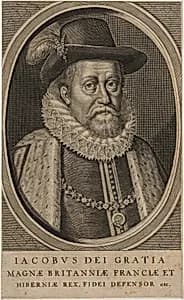
Medium
engraving
Dimensions
sheet: 31 × 19 cm (12 3/16 × 7 1/2 in.)
Classification
Department
CG-E
Museum
National Gallery of Art, Washington, D.C.
Credit
Rosenwald Collection
Accession Number
1951.11.941
Rights
Public Domain
Art Historical Context
This engraving of *James I of England*, between 1776 and 1800 by an unknown artist, captures the likeness of the Stuart monarch who ruled from 1603 to 1625. As king of both Scotland (as James VI) and England James I symbolized the union of crowns, navigating religious tensions, commissioning the King James Bible, and fostering early colonial ventures like Jamestown. Created over 150 years after his death, this print reflects a renewed interest in Tudor-Stuart history during the late Enlightenment, possibly amid Britain's American conflicts. Engraving, an intaglio technique where lines are incised into a metal plate and inked under pressure, allowed for precise, reproducible portraits ideal for books, pamphlets, and collections. Measuring 31 × 19 cm, this sheet from the National Gallery of Art's Rosenwald Collection exemplifies 18th-century printmaking's role in democratizing royal imagery, making historical figures accessible beyond oil paintings. Housed in the CG-E department and classified as a print, it highlights the enduring cultural fascination with James I's legacy—from absolutist monarchy to literary patronage—offering visitors a tangible link to Britain's transformative era.