
Jan (1438/41–1516), First Count of Egmond; Magdalena, Countess of Egmond (1464–1538)
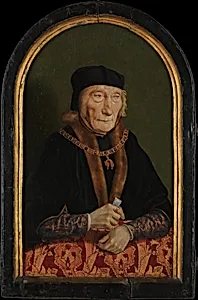
Medium
Oil on canvas, transferred from wood (.122, the Count); oil on wood (.118, the Countess)
Dimensions
(.122, the Count): overall, with arched top, 16 3/4 x 10 1/4 in. (42.5 x 26 cm); original painted surface 16 1/4 x 9 5/8 in. (41.3 x 24.4 cm); (.118, the Countess) overall, with arched top and engaged frame original painted surface 19 1/4 x 12 1/2 in. (48.9 x 31.8 cm); painted surface 16 1/2 x 9 1/4 in. (41.9 x 24.8 cm)
Classification
Paintings
Department
European Paintings
Museum
Metropolitan Museum of Art, New York, NY
Credit
The Friedsam Collection, Bequest of Michael Friedsam, 1931
Accession Number
32.100.118, 122
Rights
Public Domain
Tags
Art Historical Context
These paired portraits depict Jan, the first Count of Egmond (8/41–1516), and his wife, Magdalena, Countess of Eg (1464–1538), prominent nobles from the North Netherlands during the late 15th or early 16th century Created by an anonymous North Netherlandish painter, the works exemplify the Northern Renaissance tradition of intimate, realistic portraiture, where oil on wood (or canvas transfer) allowed for meticulous detail in fabrics, jewelry, and facial expressions, conveying status and piety. Jan's portrait measures about 16½ x 9¾ inches, while Magdalena's is slightly larger at 16½ x 9¼ inches, both with characteristic arched tops suggesting a Gothic architectural frame. The Egmonds were key figures in Dutch aristocracy; Jan's title marked the rise of a powerful lineage tied to the House of Egmond, influential in regional politics and the Habsburg court. These small-scale panels, likely pendants meant to hang together, highlight the era's fascination with individualized likenesses, bridging medieval donor portraits and emerging secular portraiture. Now in the Metropolitan Museum of Art's Friedsam Collection, they offer a glimpse into Renaissance nobility's self-presentation, rich with symbolic attire that underscores lineage and devotion. (198 words)