
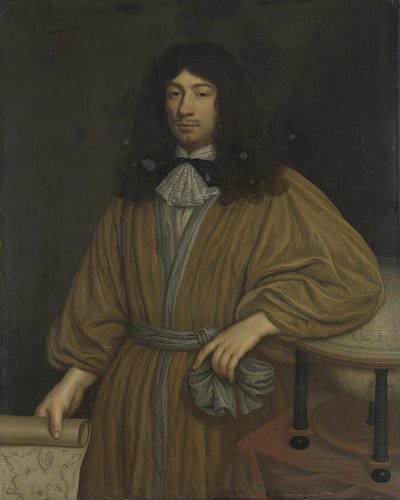
Jan Boudaen Courten (1635-1716), heer van St Laurens, Schellach en Popkensburg. Raad van Middelburg en bewindhebber der VOC
Medium
oil on canvas
Dimensions
116; 94; 9.5
Rights
Public Domain
About this artwork
Portret van Johan Boudaen Courten, heer van St. Laurens, Schellach en Popkensburg. Raad van Middelburg en bewindhebber der VOC. Kniestuk, staande, met een zeekaart van het Caraïbisch gebied in de rechterhand, de linkerarm leunend op een globe.
Art Historical Context
This striking 1668 portrait by Cornelis Janssens vanulen (II), a Dutch painter of the Golden Age, Jan Boudaen Cour (1635–1716), a noble and influential figure as lord of St. Laurens, Schellach, and Popkens, councilor in Middelburg and director (bewindhebber) of the Dutch East India CompanyVOC). Measuring 116 x 94 cm in oil on canvas—a medium prized for its luminous detail and depth—this knee-length depiction shows Courten standing confidently, embodying the era's elite patrons who commissioned such works to affirm their status. In the painting, Courten holds a sea chart of the Caribbean in his right hand while resting his left arm on a globe, potent symbols of Dutch maritime prowess and global ambition during the 17th century. The VOC, a pioneering multinational corporation, drove exploration, trade, and colonization from Asia to the Americas, and Courten's pose underscores his role in this expansive empire. Janssens van Ceulen, known for his precise, lifelike portraits of nobility and merchants, employs subtle lighting and rich textures to convey authority and intellect. Housed in the Rijksmuseum, this artwork offers a window into the Dutch Golden Age's blend of commerce, power, and cultural confidence, reminding visitors of the individuals who shaped a seafaring nation's legacy.