
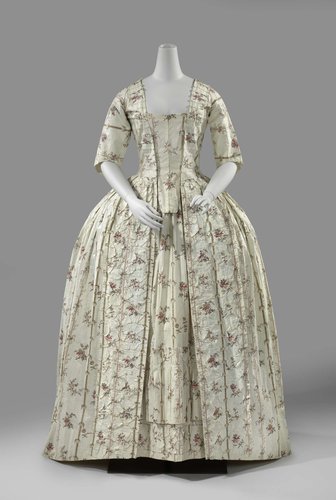
Japon van bedrukte stof
1775 - 1785
Medium
chintz
Dimensions
107
Rights
Public Domain
About this artwork
length 107 cm
Art Historical Context
Step into the vibrant world of 18th-century European fashion with *Japon van bedruk stof*, a striking kimono-style robe crafted from chintz around 1775–1785. Measuring 107 cm in length, anonymous textile piece exemplifies the exotic allure of printed cotton fabrics that captivated Western wardrobes. Likely inspired by Asian garments, the "japon" was a loose, comfortable robe worn at home by men and women alike, blending Eastern silhouette with Indian motifs. Chintz, the medium here, originated from India's Coromandel Coast and was imported via Dutch traders through the VOC (Dutch East India Company). Its brilliance came from intricate block-printing techniques using mordants—natural dyes fixed with alum—that resisted fading through repeated washes, unlike European prints. This innovation sparked a craze across Europe, influencing everything from upholstery to high fashion, though it faced bans in France and Britain to protect local industries. Culturally, this robe symbolizes global trade's impact on daily life, merging Eastern aesthetics with Western leisurewear. As a surviving artifact, it offers a tactile glimpse into an era of cross-cultural exchange, where a simple length of fabric bridged continents.
About the Artist
anonymous
In the vast tapestry of art history, "Anonymous" stands not as a singular individual but as a collective designation for countless unidentified creators whose works have endured across millennia. These artists, spanning prehistoric cave painters to medieval illuminators and folk craftsmen, produced the foundational layers of human visual culture. Prior to the Renaissance, when individual fame emer...