
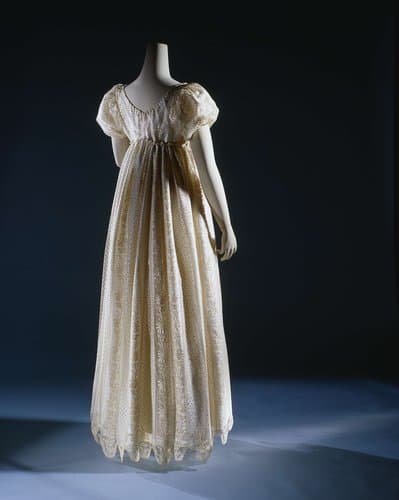
Japon van zijden kloskant
c. 1805 - c. 1825
Medium
bobbin lace
Dimensions
12; 143; 10; 270
Rights
Public Domain
About this artwork
banen: breedte 12 cm
Art Historical Context
Step into the delicate world of early 19th-century lace with *Japon van zijdenoskant*, an anonymous crafted around 1805–1825. This stunning silk bobbin lace robe, styled in the exotic "japon" form inspired by Japanese kimonos, an impressive 143 cm in length and 270 cm width—large enough to drape elegantly over furniture or as a luxurious garment. Composed of meticulously joined "banen" or strips, each 12 cm wide, it the precision of traditional European lace-making techniques. Bobbin lace, or "kloskant," is a labor-intensive craft where silk threads are woven on a pillow using dozens of bobbins, twisted and crossed to form intricate, openwork patterns. Popular in the Netherlands and Flanders during this Napoleonic-era period, silk variants were prized for their sheen and durability, symbolizing wealth and refinement. This piece reflects the era's fascination with Oriental motifs amid Europe's growing trade with Asia. Though anonymous, the creator's skill highlights lace as both high fashion and fine art, often adorning elite wardrobes or interiors. Imagine the hours invested in its creation—a testament to handmade elegance that captivates with its airy translucence and cultural fusion. (198 words)
About the Artist
anonymous
In the vast tapestry of art history, "Anonymous" stands not as a singular individual but as a collective designation for countless unidentified creators whose works have endured across millennia. These artists, spanning prehistoric cave painters to medieval illuminators and folk craftsmen, produced the foundational layers of human visual culture. Prior to the Renaissance, when individual fame emer...