
Jar
Unknown Artist
8th–10th century
Medium
Earthenware; glazed
Dimensions
H. 2 1/8 in. (5.4 cm) Diam. 1 15/16 in. (4.9 cm) Wt. 1.9 oz. (53.9 g)
Classification
Ceramics
Department
Islamic Art
Museum
Metropolitan Museum of Art, New York, NY
Credit
Rogers Fund, 1932
Accession Number
32.150.109
Rights
Public Domain
Tags
Art Historical Context
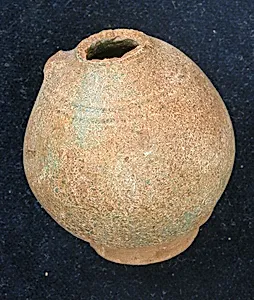
This delicate earthenware jar, crafted by an unknown artist between the th and 10th, exemplifies the refined ceramic traditions of the early Islamic world. Standing just over 2 inches tall with a diameter of nearly 2 inches, its petite scale suggests it may have held precious commodities like cosmetics, spices, or k eyeliner—everyday luxuries in Abbasid-era households. The glossy glaze, a hallmark of Islamic pottery, not only sealed the porous earthenware for practical use but also enhanced its aesthetic appeal, reflecting light in a way that mimicked more precious metals. Glazed ceramics like this jar were pivotal in Islamic art, emerging during a golden age of technological exchange across the Middle East, Central Asia, and beyond. Artisans mastered tin-opacified glazes around this time, paving the way for vibrant polychrome wares and later luster techniques that dazzled courts from Baghdad to Córdoba. Though undecorated in surviving form, such vessels highlight the period's emphasis on functionality fused with subtle elegance, free from figurative motifs in line with Islamic aniconism. Acquired through the Rogers Fund in 1932, this jar now graces the Metropolitan Museum of Art's Islamic Art department, offering a tangible glimpse into the ingenuity of medieval potters whose work bridged utility and artistry.