
Jar
Unknown Artist
9th century
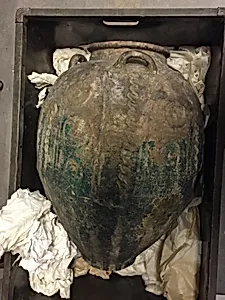
Medium
Earthenware; glazed
Dimensions
H. 24 1/4 in. (61.6 cm) Diam. 24 in. (61 cm)
Classification
Ceramics
Department
Islamic Art
Museum
Metropolitan Museum of Art, New York, NY
Credit
Bequest of George D. Pratt, 1935
Accession Number
42.152.2
Rights
Public Domain
Tags
Art Historical Context
This magnificent 9th-century jar, crafted from glazed earthenware, stands as testament to the ingenuity of early Islamic artisans. Measuring an impressive 24¼ inches tall and 24 inches in diameter, its generous proportions suggest it was designed for practical storage—likely holding water, grains, or oils in bustling households or markets of the Abbasid era. The application of glaze not only rendered the earthenware waterproof and durable but also allowed for vibrant, lustrous finishes that elevated everyday objects into works of subtle beauty. Housed in the Metropolitan Museum of Art's Islamic Art Department, this jar exemplifies the ceramic traditions flourishing across the Islamic world during the 9th century, a golden age of cultural exchange along trade routes from Mesopotamia to Spain. Glazing techniques, refined during this period, marked a technological leap from unglazed pottery, enabling mass production and export that spread Islamic ceramic styles far and wide. Though the artist remains unknown, the jar's form reflects the era's emphasis on functionality fused with aesthetic harmony. Bequeathed by George D. Pratt in 1935, this piece invites visitors to ponder the daily lives of people a millennium ago, where such vessels bridged utility and artistry in the heart of Islamic civilization.