
Jar
Unknown Artist
ca. 1550–1458 B.C.
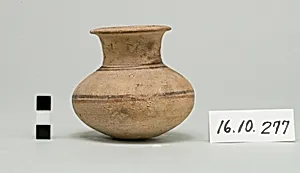
Medium
Pottery
Dimensions
H. 7.8 cm (3 1/16 in.)
Classification
Jar
Period
New Kingdom
Department
Egyptian Art
Museum
Metropolitan Museum of Art, New York, NY
Credit
Rogers Fund, 1916
Accession Number
16.10.277
Rights
Public Domain
Art Historical Context
This delicate pottery jar, dating to around 1550–1458 B.C., hails from Egypt's New Kingdom, specifically Dynasty 18—a golden age of imperial power and artistic innovation under pharaohs like Hatshepsut and Thutmose III. Standing just 7.8 cm tall, it exemplifies the everyday craftsmanship of ancient Egyptian artisans, who produced such vessels in vast numbers for practical and ritual purposes. Acquired through the Rogers Fund in 1916, it now graces the Metropolitan Museum of Art's Egyptian Art collection, offering a tangible link to a civilization at its zenith. Crafted from Nile Valley clay, the jar was likely wheel-thrown and fired in kilns, showcasing the refined pottery techniques that had evolved over millennia. While unadorned, its simple, elegant form highlights the Egyptians' mastery of functional design—small jars like this often held precious oils, cosmetics, or offerings for the gods and the dead. In a culture obsessed with eternity, even humble pottery played a role in daily life and afterlife beliefs, underscoring the blend of utility and spirituality. Visitors, pause to appreciate how this modest artifact whispers stories of ancient workshops along the Nile, reminding us that greatness often lies in the details of the ordinary.