
Jar Label
Unknown Artist
ca. 1390–1352 B.C.
Medium
Pottery and ink, paint
Dimensions
H. 13.7 × W. 9.4 × Th. 0.8 cm (5 3/8 × 3 11/16 × 5/16 in.)
Classification
Jar Label
Period
New Kingdom
Department
Egyptian Art
Museum
Metropolitan Museum of Art, New York, NY
Credit
Rogers Fund, 1917
Accession Number
17.10.1134
Rights
Public Domain
Art Historical Context
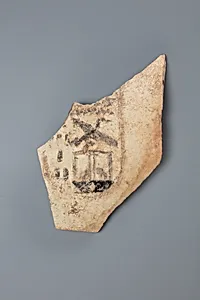
Welcome to the Egyptian Art galleries at the Metropolitan Museum of Art, where we encounter a humble yet revealing artifact: the *Jar Label*, by an unknown artist around 1390–1352.C. during the New Kingdom's Dynasty 18. This was Egypt's golden age of imperial power, under pharaohs like Amenep III, when grand temples rose and vast trade networks flourished. Small objects like this pottery tag offer a window into the everyday bureaucracy that supported such splendor. Measuring just 5 3/8 × 3 11/16 × 5/16 inches, this thin shard of pottery bears inscriptions in ink and paint—likely hieroglyphs noting the jar's contents, such as oil, grain, or wine. These labels were tied or adhered to storage vessels in temples, tombs, or royal storehouses, showcasing the Egyptians' meticulous record-keeping and advanced administrative systems. The use of everyday pottery as a writing surface highlights their practical ingenuity, blending utility with the sacred script that preserved knowledge for eternity. Acquired through the Rogers Fund in 1917, this artifact underscores the cultural importance of literacy in ancient Egypt, where even mundane labels ensured efficient resource management amid a thriving economy. It's a reminder that behind the pyramids and pharaohs lay a society powered by precise, painted words.