
Jean-Baptiste Isabey
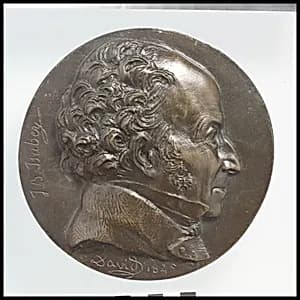
signed and dated 1845, cast between 1845 and 1857
Medium
Bronze
Dimensions
Diameter: 6 7/16 in. (16.4 cm)
Classification
Medals and Plaquettes
Culture
French
Department
European Sculpture and Decorative Arts
Museum
Metropolitan Museum of Art, New York, NY
Credit
Gift of Joseph G. Reinis, 1999
Accession Number
1999.454.1
Rights
Public Domain
Tags
Art Historical Context
This exquisite bronze medal, titled *Jean-Baptiste Isabey was created by the renowned French Romantic sculptor Pierre-Jean David dAngers in 1845, with casting completed between 1845 and1857. Measuring just 6 7/16 inches in diameter, it a detailed profile portrait of the sitter, a format rooted in ancient Roman coinage but revitalized in the 19th century as a prestigious medium for commemorating cultural luminaries. Housed in the Metropolitan Museum Art's European Sculpture andative Arts collection, it reflects the era's fascination with intimate, sculptural tributes. David d'Angers, a master of medallic art, produced hundreds of such portraits honoring philosophers, artists, and statesmen, capturing their essence with dynamic modeling and expressive detail. The subject, Jean-Baptiste Isabey (1767–1855), was a celebrated miniaturist and draftsman who served as official painter to Napoleon and the Bourbon Restoration courts, producing iconic portraits of emperors, kings, and revolutionaries. This medal, signed and dated by the artist, immortalizes Isabey late in his career, blending classical idealism with Romantic vitality. Bronze medals like this were cast in small editions, making them coveted collector's items that bridged sculpture and print traditions. They highlight France's golden age of plaquette art, where technical precision in relief carving conveyed profound historical and personal narratives. A gift to the Met in 1999, it invites visitors to appreciate the artistry of capturing genius in miniature.
About the Artist
Pierre Jean David d'Angers · 1788–1856
Pierre-Jean David d'Angers, born on March 12, 1788, in Angers, France, to a wood carver and ornamental sculptor father who had fought in the Republican army, began his artistic training locally under Marchand and Jean-Jacques Delusse at the École centrale d'Angers from 1806 to 1807. In 1808, he arrived in Paris with scant funds and entered the studio of Philippe-Laurent Roland, later working under...