
Jewelry set
Unknown Artist
19th century
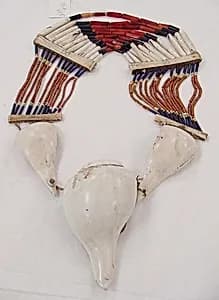
Medium
bone, shell, stone, cotton
Classification
Jewelry Set
Culture
Indian (Naga-Angami)
Department
Costume Institute
Museum
Metropolitan Museum of Art, New York, NY
Credit
Gift of Muriel Kallis Newman, 2008
Accession Number
2008.190.23a, b
Rights
Public Domain
Art Historical Context
This exquisite jewelry set from 19th-century Naga-Angami culture showcases the masterful craftsmanship of Northeast India's Naga people, particularly the Angami tribe. Crafted from natural materials—bone, shell, stone, and—the set exemplifies traditional adornments likely worn for ceremonies, rites of passage, or to signify social status. The use of readily available organic elements highlights the resourcefulness of Naga artisans, who transformed everyday natural finds into symbols of identity and prestige. In Naga-Angami society, such jewelry held deep cultural importance, often reflecting warrior traditions, clan affiliations, or spiritual beliefs during a time when headhunting and inter-tribal dynamics shaped daily life. Techniques involved meticulous carving of bone and stone for beads or pendants, inlaying iridescent shells for visual appeal, and weaving cotton threads for durability and flexibility. These pieces bridged functionality and artistry, enduring as heirlooms across generations. Now housed in the Metropolitan Museum of Art's Costume Institute, thanks to the generous gift of Muriel Kallis Newman in 2008, this set offers visitors a tangible connection to indigenous Indian heritage. It invites reflection on how personal ornamentation encodes history, reminding us of the enduring beauty in sustainable, handcrafted traditions.