
2/77
1577
Medium
engraving
Dimensions
143; 101
Rights
Public Domain
About this artwork
verzamelaarsmerk, verso midden onder, gestempeld: Lugt 2228
Art Historical Context
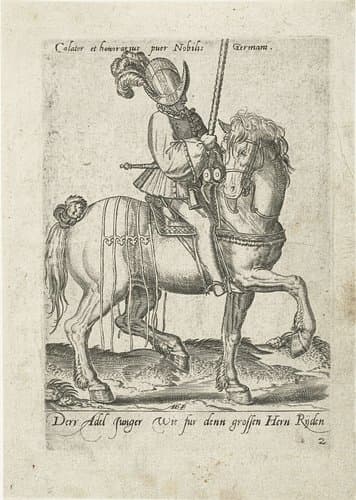
Abraham de Bruyn's *2/77* (1577) is a engraving measuring just 143 mm high by 101 mm wide, exemplifying the precision of 16th-century Flemish printmaking. Active in Antwerp during the Renaissance, de Bruyn was a skilled engraver and publisher renowned for his detailed costume books, which captured the attire of diverse European peoples. This small plate, likely the second in a series of 77, showcases his mastery of line work, using fine burin techniques to render textures like fabrics and accessories with remarkable clarity and depth. Engravings like this were revolutionary for their time, enabling widespread dissemination of visual information before photography. De Bruyn's works served as both artistic achievements and cultural documents, offering insights into Renaissance fashion, social hierarchy, and national identities amid the vibrant trade hubs of the Spanish Netherlands. Collectors prized them for their historical value, as evidenced by the verso collector's mark (Lugt 2228), stamped centrally at the bottom—a testament to its enduring appeal among connoisseurs. Today, *2/77* invites us to marvel at how a tiny print preserved a fleeting world of elegance and variety, bridging art and everyday life in the 1570s.