
Joseph
Unknown Artist
second half 18th century
Medium
Wood, polychromed and gilded
Dimensions
H. ca. 4 in. (10.2 cm)
Classification
Crèche figure
Culture
probably Ecuadoran, Quito
Department
The American Wing
Museum
Metropolitan Museum of Art, New York, NY
Credit
Gift of Loretta Hines Howard, 1964
Accession Number
64.164.224
Rights
Public Domain
Tags
Art Historical Context
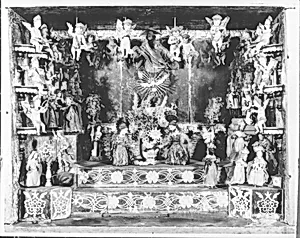
This exquisite wooden sculpture, titled *Joseph*, hails from the Quito School in Ecuador during the second half of the 18th century. Standing just 4 inches (10.2 cm) tall, it exemplifies the refined artistry of colonial Latin American religious statuary. Carved from wood and meticulously polychromed—painted in vibrant layers of color—with delicate gilding, the figure likely depicts Saint Joseph amid angels, men, and women, evoking a tender biblical scene. Such intimate scale suggests it was a devotional object for private altars or homes, bringing divine presence into everyday life. The Quito School flourished under Spanish colonial rule, blending European Baroque and Rococo influences with indigenous craftsmanship. Artisans in Quito mastered techniques like estofado, where painted surfaces were incised to reveal underlying gold leaf, creating a shimmering, jewel-like effect that heightened spiritual reverence. This piece reflects the era's fervent Catholicism, where sculptures served as focal points for worship, processions, and personal piety. Now housed in The Metropolitan Museum of Art's American Wing—a nod to the Americas' shared colonial heritage—this rare survivor was generously gifted by Loretta Hines Howard in 1964. Its survival speaks to the enduring legacy of Quito's workshops, which produced thousands of such vivid icons, bridging continents and cultures in a burst of creative fervor.