
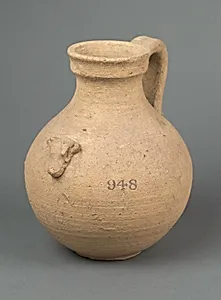
Jug
Unknown Artist
600–480 BCE
Medium
Terracotta
Dimensions
5 3/16in. (13.2cm)
Classification
Vases
Culture & Period
Cypriot · Cypro-Archaic II
Department
Greek and Roman Art
Museum
Metropolitan Museum of Art, New York, NY
Credit
The Cesnola Collection, Purchased by subscription, 1874–76
Accession Number
74.51.556
Rights
Public Domain
Art Historical Context
This delicate terracotta jug, crafted by an unknown Cypriot artisan during the Cypro-Archaic II (600–480 BCE offers a glimpse into everyday life on the island of Cyprus, a vibrant cultural crossroads between the Near East, Egypt, and the emerging Greek world. Standing just 5 3/16 inches (13.2 cm) tall, this small vessel exemplifies the practical yet refined pottery produced for holding liquids like water, wine, or oil in households and rituals. Terracotta, fired clay abundant on Cyprus, was the medium of choice for such vases, shaped on a potter's wheel and often burnished for durability and sheen. During the Cypro-Archaic II era, Cypriot potters blended local traditions with foreign influences, creating functional forms that highlight the island's role as a Mediterranean trade hub. Though simple in design, this jug reflects skilled craftsmanship essential to daily sustenance and ceremonial practices. Acquired as part of The Cesnola Collection at The Metropolitan Museum of Art, it joins thousands of Cypriot treasures that illuminate an underappreciated ancient civilization, bridging the Archaic Greek world with Eastern innovations. A humble survivor of millennia, it invites us to appreciate the artistry in the ordinary.