
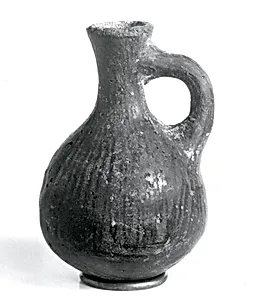
Jug
Unknown Artist
ca. late 8th–7th century BCE
Medium
Ceramic
Dimensions
3.75 in. (9.53 cm)
Classification
Ceramics-Vessels
Culture & Period
Israelite · Iron Age II
Department
Ancient Near Eastern Art
Museum
Metropolitan Museum of Art, New York, NY
Credit
Gift of Harris D. and H. Dunscombe Colt, 1934
Accession Number
34.126.47
Rights
Public Domain
Art Historical Context
This delicate ceramic jug, crafted by an unknown Israelite artisan around the late 8th to 7th century BCE Iron Age II, offers a glimpse into the daily of ancient Judah. Standing just 3.75 inches tall it belongs to a class of practical vessels used for storing oils, perfumes, or liquids in households and rituals. Its modest size and simple form highlight the utilitarian artistry of the period, when the Kingdom of Judah navigated turbulent times, including the Assyrian conquest of the Northern Kingdom in 722 BCE and looming Babylonian threats. As a product of Israelite pottery traditions, the jug exemplifies regional ceramic techniques: likely wheel-thrown on a potter's wheel and fired in local kilns to achieve durability. These vessels were essential for everyday commerce and domestic use, reflecting the agrarian society's reliance on such wares amid geopolitical shifts. Discovered in the Ancient Near East, it underscores the cultural continuity of Iron Age communities rooted in biblical history. Today, this jug graces the Metropolitan Museum of Art's Ancient Near Eastern Art department, a gift from Harris D. and H. Dunscombe Colt in 1934. It invites us to ponder the anonymous hands that shaped it, bridging millennia to reveal the ingenuity of a vanished world.