
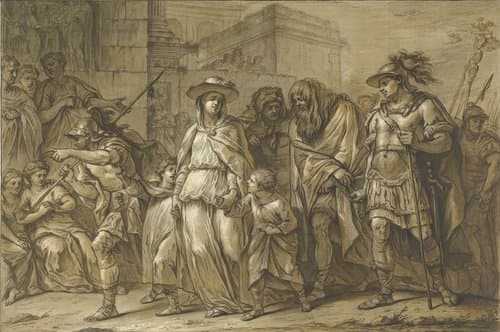
Julius Sabinus en Epponina met hun twee kinderen als gevangenen door Rome gevoerd
1726 - 1783
Medium
pen
Dimensions
300; 450
Rights
Public Domain
About this artwork
Gift of C.P. van Eeghen, Amsterdam
Art Historical Context
This poignant pen drawing by French artist Blaise Nicolas Lesueur1726–1783) captures a dramatic moment from ancient Roman history: Julius Sab and his devoted wife Epponina, with their two young children being led as prisoners through the streets of Rome. Created during the 18th century, when interest in classical antiquity surged amid the Enlightenment, the work measures 300 × 450 mm and exemplifies Lesueur's skill as a draughtsman known for historical and mythological scenes. The subject draws from Tacitus's *Histories*, recounting the Gaulish noble Sabinus's failed revolt against Rome in 69 AD. Claiming descent from Julius Caesar, Sabinus hid for nine years in a cave, supported by Epponina's extraordinary loyalty—she bore and raised their sons there before their capture. Lesueur's composition likely emphasizes their tragic nobility, a popular theme in neoclassical art that romanticized stoic virtue amid defeat. Rendered in pen ink, the piece highlights Lesueur's precise line work, conveying emotion through dynamic figures and architectural details. A gift from C.P. van Eeghen of Amsterdam, it reflects 18th-century collecting passions for antiquarian narratives, inviting us to ponder enduring tales of love, rebellion, and imperial power.