
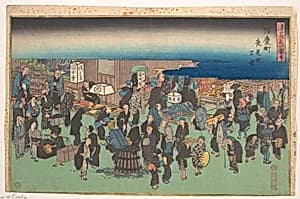
浪花名所図会 順慶町夜見世の図|Junkei machi Yomise no Zu
ca. 1828
Medium
Woodblock print; ink and color on paper
Dimensions
H. 9 1/4 in. (23.5 cm); W. 14 3/16 in. (36 cm)
Classification
Prints
Culture & Period
Japan · Edo period (1615–1868)
Department
Asian Art
Museum
Metropolitan Museum of Art, New York, NY
Credit
Rogers Fund, 1919
Accession Number
JP1202
Rights
Public Domain
Tags
Art Historical Context
In the bustling Edo-period city of Osaka—known then as Naniwa—Utagawa Hiroshige captures the vibrant energy of nightlife in *Junkei-machi Yomise no Zu* (Night Stalls in Junkei Town), from his series *Namikazeya Meisho Zue* (Famous Places of Osaka, ca. 1828 This woodblock print, a of ukiyo-e ("pictures of the floating world"), a crowded evening market scene teeming revelers, lanterns glowing against the night sky, and vendors hawking wares. Hiroshige, a master of the genre alongside Hokusai, elevated everyday urban life into poetic art, making such prints affordable souvenirs for the masses. Rendered in vivid ink and color on paper (9¼ × 14⅛ in.), the work showcases Hiroshige's genius for atmospheric perspective and dynamic composition. Crowds weave through lantern-lit stalls, evoking the sensory thrill of Edo Japan's pleasure districts—smoky grills, laughter, and fleeting pleasures amid strict samurai rule. Woodblock printing, involving collaborative carving and multiple color blocks, democratized art, spreading these glimpses of commoner culture far beyond elite circles. Housed in the Metropolitan Museum of Art's Asian Art collection (Rogers Fund, 1919), this print offers a window into 19th-century Japan's social fabric, where markets pulsed as economic and entertainment hubs. It's a timeless reminder of how Hiroshige transformed ordinary moments into enduring visual poetry.
About the Artist
Utagawa Hiroshige · 1826–1869
Utagawa Hiroshige (1797–1858), born Andō Tokutarō, was the last great master of Japanese ukiyo-e woodblock printmaking and one of the most influential landscape artists in history. Born in Edo (modern Tokyo) into a low-ranking samurai family serving as fire wardens, Hiroshige transformed landscape printmaking into a poetic meditation on nature, weather, and everyday life. His revolutionary approac...