
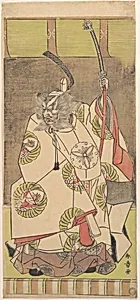
四代目市川団十郎|Kabuki Actor Ichikawa Danjūrō IV
12th month, 1771
Medium
Woodblock print (nishiki-e); ink and color on paper
Dimensions
12 31/32 x 5 13/16 in. (33.0 x 14.8 cm)
Classification
Prints
Culture & Period
Japan · Edo period (1615–1868)
Department
Asian Art
Museum
Metropolitan Museum of Art, New York, NY
Credit
Purchase, Joseph Pulitzer Bequest, 1918
Accession Number
JP434
Rights
Public Domain
Tags
Art Historical Context
This striking woodblock print captures the renowned kabuki actor Ichikawa Danjūrō IV in a moment of dramatic intensity. Created by Katsukawa Shunshō in the twelfth month of 1771, during Japan’s Edo period, the work exemplifies the vibrant world of ukiyo-e, or “pictures of the floating world.” Shunshō, a leading figure in the Katsukawa school, specialized in actor portraits that brought the excitement of the kabuki stage to a wider audience through affordable prints. Measuring just under thirteen inches tall, the composition uses the nishiki-e technique—full-color woodblock printing with multiple blocks—to render rich inks and subtle gradations on paper. This medium allowed artists to convey the expressive makeup, costumes, and gestures central to kabuki performance, making theater stars like Danjūrō IV instantly recognizable to viewers. The print’s tall, narrow format suits the standing figure, emphasizing his commanding presence. Today housed in the Metropolitan Museum of Art’s Asian Art collection, this piece reflects the cultural importance of kabuki as popular entertainment and the role of prints in shaping celebrity culture in eighteenth-century Japan. It offers modern visitors a vivid glimpse into Edo-period artistry and performance traditions.
About the Artist
Katsukawa Shunshō 勝川春章 (Japanese) · 1726 –1792
Japanese, 1726–1792