
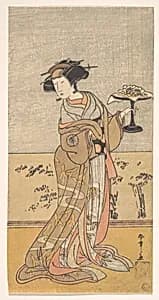
初代中村富十郎|Kabuki Actor Nakamura Tomijūrō
1777, 10th month
Medium
Woodblock print (nishiki-e); ink and color on paper
Dimensions
11 3/10 x 5 3/4 in. (28.7 x 14.6 cm)
Classification
Prints
Culture & Period
Japan · Edo period (1615–1868)
Department
Asian Art
Museum
Metropolitan Museum of Art, New York, NY
Credit
Purchase, Joseph Pulitzer Bequest, 1918
Accession Number
JP351
Rights
Public Domain
Tags
Art Historical Context
This striking woodblock print by Katsukawa Shunshō captures the celebrated kabuki actor Nakamura Tomijūrō I in a moment of dramatic intensity. Created in the tenth month of 1777 during Japan’s Edo period, the portrait belongs to the vibrant tradition of yakusha-e, or actor prints, which brought the excitement of the theater into everyday life. Shunshō, founder of the influential Katsukawa school, was renowned for his ability to convey an actor’s distinctive features, posture, and stage presence with remarkable clarity. Printed in the full-color nishiki-e technique using ink and color on paper, the work exemplifies the technical sophistication of ukiyo-e printmaking at its peak. Such prints served as affordable souvenirs for kabuki fans, allowing them to collect images of their favorite performers much like modern trading cards or posters. The vertical format and refined line work highlight Shunshō’s signature approach, which emphasized realistic likenesses over the more stylized conventions of earlier actor portraits. Today housed in the Metropolitan Museum of Art, this piece offers a vivid window into Edo-period popular culture, where theater, fashion, and visual art intertwined. It reminds viewers of the enduring appeal of live performance and the artistry that preserved its fleeting moments for generations.
About the Artist
Katsukawa Shunshō 勝川春章 (Japanese) · 1726 –1792
Japanese, 1726–1792