
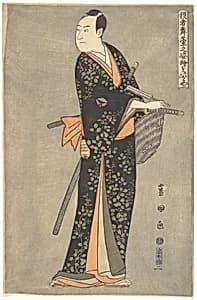
Kabuki Actor Sawamura Sōjūrō III, from the series Portraits of Kabuki Actors on Stage (Yakusha butai no sugata-e)
ca. 1794
Medium
Woodblock print; ink and color on paper
Dimensions
15 3/8 x 10 1/8 in. (39.1 x 25.7cm)
Classification
Prints
Culture & Period
Japan · Edo period (1615–1868)
Department
Asian Art
Museum
Metropolitan Museum of Art, New York, NY
Credit
Fletcher Fund, 1929
Accession Number
JP1531
Rights
Public Domain
Tags
Art Historical Context
Step into the dramatic world of Edo-period Japan with this striking woodblock print by Utagawa Toyokuni, titled *Kabuki Actor Sawamura Sōjūrō III* from his series *Portraits of Kabuki Actors on Stage (Yakusha butai no sugata-e)*, created around 1794. During vibrant Edo period (161–1868), Kab theater was a cultural phenomenon, blending music, dance, and elaborate costumes to captivate audiences in bustling urban centers like Edo (modern Tokyo). Toyokuni, a master of the ukiyo-e ("pictures of the floating world") tradition, specialized in yakusha-e—actor portraits that celebrated these larger-than-life performers, turning stage icons like the renowned Sawamura Sōjūrō III into accessible art for everyday viewers. This ink and color print on paper, measuring 15 3/8 x 10 1/8 inches, showcases Toyokuni's skill in multi-block woodblock printing, layering vivid hues and bold lines to capture the actor's intense pose—likely mid-performance with sword in hand, evoking the high-stakes drama of Kabuki roles. Yakusha-e like this not only documented theatrical styles but also fueled fan culture, making celebrities of actors through affordable, mass-produced images. Housed in the Metropolitan Museum of Art's Asian Art Department (Fletcher Fund, 1929), it offers a window into Japan's playful yet sophisticated entertainment world, where art and performance intertwined seamlessly.
About the Artist
Utagawa Toyokuni I · 1777–1835
Japanese, 1777–1835