
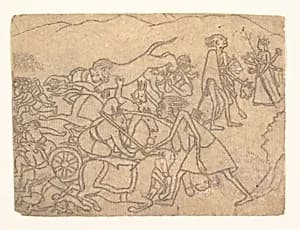
Kali Presenting the Heads of Chanda and Munda to Durga: Scene from the Devi Mahatmya (Glory of the Goddess)
Unknown Artist
ca. 1780
Medium
Graphite and ink on paper
Dimensions
5 5/8 x 7 9/16 in. (14.3 x 19.2 cm)
Classification
Paintings
Culture
India (Himachal Pradesh, Guler)
Department
Asian Art
Museum
Metropolitan Museum of Art, New York, NY
Credit
Purchase, The Research Institute of the Scripps Clinic Gift, in honor of Lita Annenberg Hazen and Arthur Ochs Sulzberger Gift, 1995
Accession Number
1995.132.2
Rights
Public Domain
Tags
Art Historical Context
This delicate graphite and ink drawing captures a vivid episode from the Devi Mahatmya, the classical Hindu text praising the supreme goddess. Kali, the fierce embodiment of divine power, presents the severed heads of the demons Chanda and Munda to Durga, who sits in regal composure amid the aftermath of battle. The scene underscores themes of protection, victory over evil, and the multifaceted nature of the divine feminine central to Hindu devotion. Created around 1780 in Guler, in the Himalayan hills of Himachal Pradesh, the work belongs to the refined tradition of Pahari painting. Though the artist remains unknown, the small sheet—measuring just over five by seven inches—reveals careful draftsmanship suited to manuscript illustration. Subtle ink washes and precise linework suggest movement through rearing horses and watchful lions, evoking the energy of cosmic conflict without relying on color. Acquired by the Metropolitan Museum in 1995, the drawing offers visitors a window into eighteenth-century Indian courtly culture, where such mythological narratives reinforced spiritual values and artistic patronage in the region.