
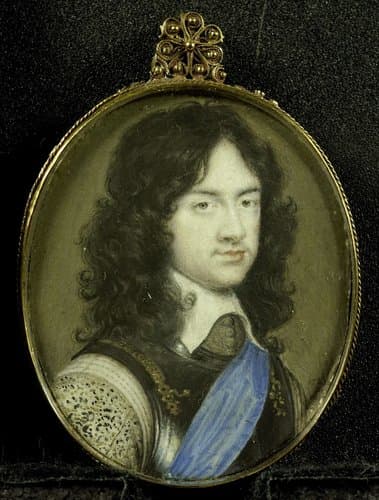
Karel Stuart (1630-85), prins van Wales. De latere koning Karel II van Engeland
1650 - 1659
Medium
cardboard
Dimensions
4; 1; 6.1; 4.6; 3.9
Rights
Public Domain
About this artwork
drager: hoogte 4,6 cm x breedte 3,9 cm
Art Historical Context
This delicate miniature portrait depicts Karel Stuart (1630–1685), the Prince of Wales who would later reign as King Charles II of England. Painted by Nathaniel Thach between 0 and 1659, it captures the young royal during a tumultuous period: the English Civil War had ended with his father Charles I's execution in 164, forcing Karel into exile across Europe. Housed in the Rijksmuseum, this artwork—measuring just 4.6 cm high by 3.9 cm wide on cardboard—offers a glimpse into Stuart loyalty amid political upheaval. The choice of cardboard as a support is intriguing for a 17th-century portrait, suggesting an intimate, possibly impromptu creation suited for private devotion or travel. Miniatures like this were prized in courts for their portability, allowing exiles and supporters to carry a likeness of their hoped-for monarch. Thach, working in this era of Dutch Golden Age portraiture, likely employed fine brushwork to convey Karel's regal poise on such a modest scale. As a rare survivor from the Interregnum years, it symbolizes the enduring hope for Restoration—fulfilled in 1660 when Charles II returned triumphantly. Visitors can appreciate how even the smallest artworks preserve grand histories.