
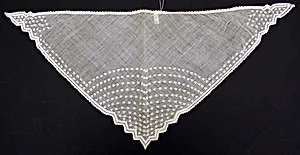
Kerchief
Unknown Artist
19th century
Medium
cotton
Classification
Kerchief
Culture
American or European
Department
Costume Institute
Museum
Metropolitan Museum of Art, New York, NY
Credit
Gift of Mrs. Edwin R. Metcalf, 1969
Accession Number
C.I.69.32.10
Rights
Public Domain
Art Historical Context
Welcome to the Costume Institute, where this delicate 19th-century ker offers a glimpse into everyday elegance from American or European life. Crafted from cotton, a versatile and breathable fabric that revolutionized clothing during the Industrial Revolution, this square cloth was likely worn on the head, neck, shoulders for both practical protection and stylish adornment. Kerchiefs like this were wardrobe staples for women across social classes, embodying the era's blend of modesty, utility, and subtle fashion. In the 1800s, cotton's affordability—thanks to advances in textile production—made such accessories accessible, reflecting broader cultural shifts toward mass-produced garments. Whether tied as a headscarf against sun and dust or draped as a neckerchief, it highlights how simple textiles carried personal expression in a time of rapid social change. Generously gifted to the Metropolitan Museum of Art by Mrs. Edwin R. Metcalf in 1969, this unassuming piece invites us to appreciate the artistry in the ordinary, preserving the tactile stories of past lives. (178 words)