
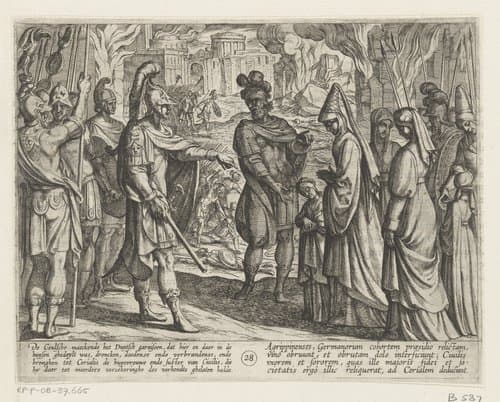
Keulse troepen brengen Civilis' vrouw en zuster bij Cerialis
1611 - 1612
Medium
etching
Dimensions
165; 210
Rights
Public Domain
About this artwork
Deze prent maakt deel uit van een reeks van 36 prenten (+ titelpagina) over de oorlogen tussen de Romeinen en de Bataven.
Art Historical Context
**Keulse troepen brengen Civil' vrouw en zuster Cerialis** (Cologne Troops Bring Civilis' Wife and Sister Cerialis), an etching by Italian artist Antonio Tempesta from 1611-1612, captures a dramatic moment from ancient history. Measuring 165mm high by 210mm wide, this print is part of an ambitious series of 36 etchings—plus a title page—icting the fierce wars between the Romans and the Batavians. Tempesta, renowned for his dynamic battle scenes and mastery of printmaking during the early Baroque period, brings the chaos of ancient conflict to life with intricate lines and vivid energy. The scene draws from the Batavian Revolt of 69-70 AD, a real rebellion led by the Batavian chieftain Julius Civilis against Roman rule, as chronicled by historian Tacitus. Here, troops from Colonia Agrippinensis (modern Cologne) deliver Civilis' captured wife and sister to the Roman general Cerialis, symbolizing the turning tide of the uprising. This moment underscores themes of betrayal, captivity, and imperial dominance, resonating in the early 17th century amid Europe's own wars and fascination with classical antiquity. Tempesta's etching technique—using acid to bite designs into a metal plate—allowed for detailed reproductions that made grand historical narratives accessible to collectors and scholars. As part of this rare series, the print highlights the cultural revival of Roman history in the Renaissance, blending education with artistic flair for a wide audience.
About the Artist
Antonio Tempesta · 1555–1630
Antonio Tempesta (1555–1630), known as 'Il Tempestino,' was a Florentine painter and printmaker whose extraordinary output of approximately 1,700 etchings made him one of the most influential printmakers of the early Baroque period. Born in Florence and trained under Santi di Tito and the Flemish master Joannes Stradanus, he enrolled in the Accademia del Disegno in 1576 before relocating to Rome i...