
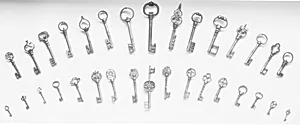
Key
Unknown Artist
1600–1640
Medium
Iron
Dimensions
Length: 5 1/2 in. (14 cm)
Classification
Metalwork-Iron
Culture
German
Department
European Sculpture and Decorative Arts
Museum
Metropolitan Museum of Art, New York, NY
Credit
Gift of Henry G. Marquand, 1887
Accession Number
87.11.462
Rights
Public Domain
Art Historical Context
This unassuming iron key, crafted by an unknown German artisan between 1600 and 1640, offers a glimpse into the everyday artistry of early modern Europe. Measuring just 5½ inches (14 cm) in length it belongs to the Metropolitan Museum of Art's European Sculpture and Decorative collection, a gift from Henry G. Marquand in 1887. As a prime example of metalwork-iron, it highlights the blacksmith's skill in forging durable tools that blended utility with subtle elegance. In 17th-century Germany, amid the transition from Renaissance to Baroque styles, keys like this were essential for securing homes, churches, and castles—symbols of access, trust, and authority. Iron, valued for its strength and malleability when heated, allowed smiths to create functional objects with potential decorative flourishes, such as pierced work or ornamental bows, though this piece's precise design reflects regional craftsmanship traditions. Today, it reminds us that even humble objects carried cultural weight, preserving the ingenuity of anonymous makers whose work underpinned daily life. A testament to enduring functionality, this key invites visitors to appreciate the artistry in the ordinary.