
Key
Unknown Artist
1st–7th century
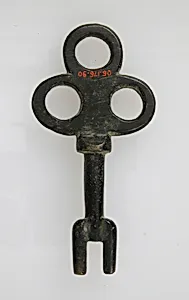
Medium
Copper alloy
Dimensions
Overall: 3 1/8 x 1 1/2 x 3/8 in. (7.9 x 3.8 x 1 cm)
Classification
Metalwork-Bronze
Culture
Roman
Department
Medieval Art
Museum
Metropolitan Museum of Art, New York, NY
Credit
Purchase, De Souhami Collection, Rogers Fund, 1906
Accession Number
06.176.90
Rights
Public Domain
Art Historical Context
This unassuming copper alloy key, dating from the 1st to 7th century, offers a tangible glimpse into the daily life of the Roman world. Crafted during the height of the Roman Empire through the transition to early medieval times, it measures a compact 3⅛ × 1½ × ⅜ inches, small enough to fit in a pocket yet sturdy for securing doors, chests, or. Acquired by The Metropolitan Museum of Art in1906 through the Rogers Fund and De Souhami Collection, it resides in the Medieval Art department, highlighting the continuity between classical antiquity and the Middle Ages. Roman metalworkers excelled in casting such objects from copper alloys—often bronze-like mixtures prized for their durability and subtle sheen. This key likely employed lost-wax casting, a sophisticated technique allowing intricate wards and bow designs that balanced form and function. Beyond utility, keys symbolized authority and trust in Roman society, entrusted to slaves, wives, or officials as emblems of responsibility. Though its maker remains unknown, this artifact underscores the artistry in everyday Roman metalwork, revealing a culture where even mundane tools reflected technical prowess and cultural values. Visitors, imagine unlocking ancient secrets with this modest survivor of millennia!