
Key
Unknown Artist
15th–16th century
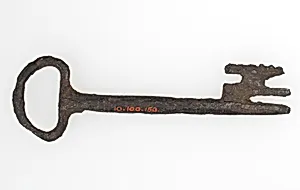
Medium
Iron
Dimensions
Overall: 4 7/8 in. (12.4 cm)
Classification
Metalwork-Iron
Culture
European
Department
Medieval Art
Museum
Metropolitan Museum of Art, New York, NY
Credit
Rogers Fund, 1910
Accession Number
10.100.150
Rights
Public Domain
Art Historical Context
This unassuming iron key, forged in Europe during the 15th16th centuries, offers a tangible glimpse into daily life during the late Middle Ages and early Renaissance. Measuring just 4 7/8 inches (12.4 cm), it functional metalwork from a time when iron was prized for its durability and versatility.ed through blacksmithing techniques like forging and possibly filing for precision, such keys secured everything from castle gates to merchants' strongboxes, symbolizing authority, privacy, and wealth in an era of feudal hierarchies and emerging trade. In the Medieval Art collection at The Metropolitan Museum of Art—acquired through the Rogers Fund in 1910—this key highlights the artistry of anonymous European craftsmen. Iron, though utilitarian, demanded skilled labor to shape without modern tools, often resulting in simple yet elegant forms. Ornate keys like this one might have belonged to nobility or clergy, underscoring how everyday objects blurred the line between necessity and status symbols. Today, it invites us to ponder the unsung heroes of medieval society: the locksmiths whose work protected treasures amid wars, plagues, and voyages of discovery. A small artifact, yet a big story of ingenuity and security.