
Key Handle
Unknown Artist
1st–7th century
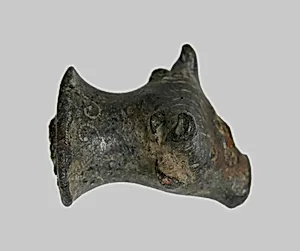
Medium
Copper alloy
Dimensions
Overall: 1 5/16 x 1 x 7/8 in. (3.4 x 2.5 x 2.2 cm)
Classification
Metalwork-Bronze
Culture
Roman
Department
Medieval Art
Museum
Metropolitan Museum of Art, New York, NY
Credit
Purchase, De Souhami Collection, Rogers Fund, 1906
Accession Number
06.176.43
Rights
Public Domain
Art Historical Context
This exquisite copper alloy key handle, from the 1st to 7th century, offers a glimpse into the everyday ingenuity of Roman life. Crafted by an unknown artisan, its compact dimensions— just 1 5/16 x 1 x 7/8 inches—suggest it adorned a personal lock for a door, chest, jewelry box. Acquired by the Metropolitan Museum of Art 1906 through the De Souhami Collection Rogers Fund, it resides in the Medieval Art department, bridging the Late Roman Empire's enduring legacy into early medieval metalworking traditions. Roman keys were more than mere tools; their handles often featured symbolic or decorative motifs, reflecting the culture's blend of practicality and artistry. Made from durable copper alloy—frequently akin to bronze—this piece exemplifies skilled lost-wax casting or forging techniques common in the period, ensuring both functionality and subtle elegance. Such artifacts highlight how Romans secured their valuables amid expanding trade and urban growth. Though small, this handle whispers of ancient routines: a merchant locking his wares or a homeowner safeguarding treasures. Its survival underscores the resilience of Roman craftsmanship, inviting us to ponder the hands that once gripped it over 1,500 years ago.