
117
1880 - 1890
Medium
color woodcut
Dimensions
223; 287
Rights
Public Domain
About this artwork
Gift of L.J. Boddaert, Delft
Art Historical Context
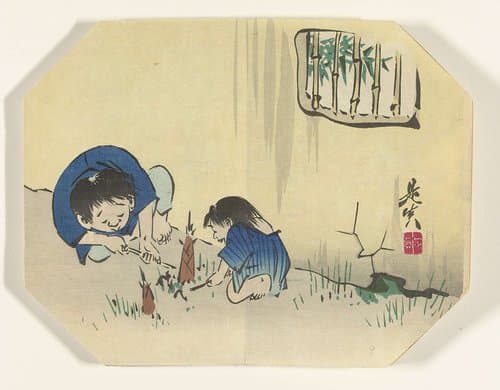
Shibata Zeshin (1807–1891), one of Japan's most innovative artists of the late Edo and early Meiji periods, *117* around 1880–1890. A master of lacquerware often mimicked painting and print techniques in his shikki-e (lacquer pictures), Zeshin occasionally ventured into woodblock printing. This small-scale color woodcut (223 × 287 mm) reflects the ukiyo-e tradition's enduring appeal during Japan's Meiji era, a time of rapid modernization and cultural exchange with the West. The medium of color woodcut highlights the collaborative artistry of Japanese printmaking, where carvers, printers, and publishers layered vibrant pigments to achieve luminous effects. Zeshin's involvement suggests a sophisticated interplay of his signature realism and decorative finesse, bridging traditional craftsmanship with emerging global influences. Though modestly sized, the work embodies the intimacy of surimono—custom prints often exchanged as gifts among elites. Generously donated by L.J. Boddaert of Delft, Netherlands, *117* underscores the international fascination with Japanese art in the late 19th century, fueled by world's fairs and Japonisme. Visitors, admire how Zeshin's genius endures in this delicate treasure, inviting a closer look at Meiji Japan's artistic elegance.
About the Artist
Shibata Zeshin · 1807–1891
Japanese, 1807–1891