
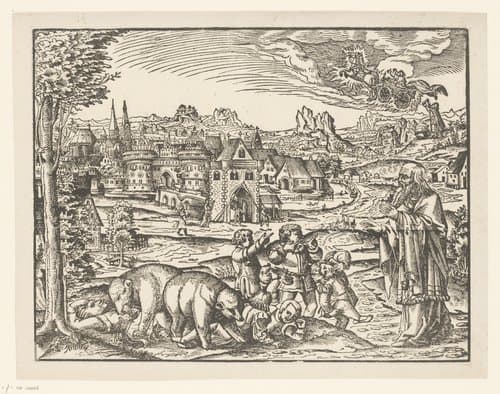
Kinderen die de profeet Elisa bespotten worden door beren verscheurd
1500 - 1599
Medium
pen
Dimensions
317; 243
Rights
Public Domain
About this artwork
houtsnede bijgewerkt met pen
Art Historical Context
In the late 16th century, striking anonymous woodcut, titled *Kinderen die de pro Elisa bespotten worden beren verscheurd ("Children Who Mock the Prophet Elisha Are Apart by Bears"), vividly depicts a dramatic biblical scene from 2 Kings 2:23-24. Measuring 243 × 317 mm, the work originates from the Netherlands or Low Countries, a hub of innovative printmaking during the Renaissance. Created between 1500 and 1599, it exemplifies how religious narratives were popularized through affordable prints, making scripture accessible to everyday viewers amid the Reformation's fervor. The artwork begins as a *houtsnede*—a woodcut carved into a block and inked for reproduction—then refined with meticulous penwork for added detail and shading. This hybrid technique enhanced the raw power of the woodcut's bold lines, capturing the chaos of snarling bears mauling mocking youths as divine retribution. Such embellishments were common in Northern European workshops, bridging the gap between mass production and fine artistry. This piece holds cultural weight as a moral tale warning against irreverence, resonating in an era of religious upheaval. Its survival underscores the era's print revolution, where images like this educated and cautioned the faithful, blending graphic horror with spiritual instruction in a compact, portable form.