
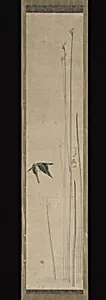
Kingfisher and Bulrushes
19th century
Medium
Hanging scroll; ink and color on paper
Dimensions
Image: 44 5/16 × 9 3/16 in. (112.5 × 23.4 cm) Overall with mounting: 80 9/16 × 10 11/16 in. (204.7 × 27.2 cm) Overall with knobs: 80 9/16 × 12 1/2 in. (204.7 × 31.8 cm)
Classification
Paintings
Culture & Period
Japan · Edo period (1615–1868)
Department
Asian Art
Museum
Metropolitan Museum of Art, New York, NY
Credit
The Howard Mansfield Collection, Purchase, Rogers Fund, 1936
Accession Number
36.100.29
Rights
Public Domain
Tags
Art Historical Context
Katsushika Hokusai’s “Kingfisher and Bulrushes,” created during Japan’s Edo period (1615–1868), captures a moment of quiet natural drama in the traditional hanging-scroll format. Painted in ink and color on paper, the vertical composition invites viewers to follow the kingfisher’s poised form amid slender reeds, a classic subject in East Asian bird-and-flower painting. Hokusai, celebrated for his ukiyo-e prints such as “The Great Wave,” here demonstrates his mastery of brushwork on a more intimate scale, blending precise observation with expressive line. Hanging scrolls like this one were designed to be viewed seasonally in Japanese homes or temples, unrolled for contemplation and then stored away. The medium’s portability and the Edo period’s flourishing interest in nature studies allowed artists like Hokusai to explore fleeting moments of wildlife with both scientific care and poetic feeling. The restrained palette and elegant placement of the bird against the tall bulrushes reflect the refined aesthetic of the time. Today in the Metropolitan Museum’s Asian Art collection, the scroll offers a window into Hokusai’s versatility and the deep cultural reverence for the natural world that shaped Japanese painting for centuries.
About the Artist
Katsushika Hokusai · 1760–1849
Katsushika Hokusai (1760-1849) stands as one of history's most influential artists, a Japanese master who revolutionized the ukiyo-e woodblock print tradition and profoundly shaped Western art. Born in the Katsushika district of Edo (modern-day Tokyo) to an artisan family, Hokusai lived through nearly nine decades of extraordinary creative evolution, adopting over thirty different artistic names t...