
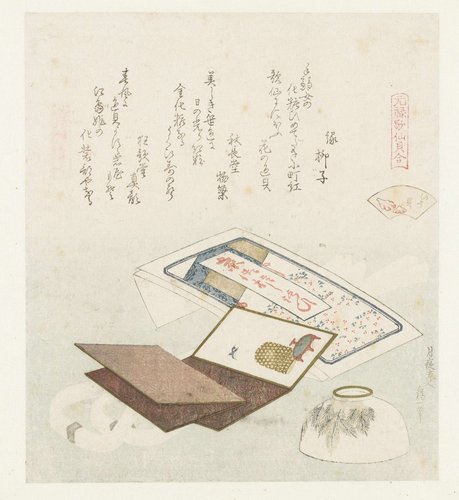
Kleur schelp
Medium
nishikie, with metallic pigments and blindprinting
Dimensions
177; 201
Rights
Public Domain
About this artwork
Legaat van J.A. Bierens de Haan, Amsterdam
Art Historical Context
**Kleur schelp (Colored Shell)** Katsushika Hokusai, 1821 Nishikie woodblock print with metallic pigments and blindprinting; 201 × 177 mm Step into the masterful world of Katsushika Hokusai, the legendary Japanese artist of the Edo period (1603–1868), with *Kleur schelp* ("Colored Shell"). Created in 1821, this intimate woodblock print exemplifies Hokusai's ukiyo-e style—"pictures of the floating world"—ating fleeting beauty in nature. At just 20 cm tall, it captures the intricate form of a seashell, rendered with exquisite precision that reflects Hokusai's lifelong fascination with the natural world, from waves to Fuji. The medium, nishikie or "brocade print," revolutionized printmaking through layered color woodblocks, mimicking luxurious textiles. Hokusai elevates this further with shimmering metallic pigments for iridescent shell highlights and blindprinting (goshi), an embossing technique that adds tactile depth without ink. These innovations made ukiyo-e accessible yet opulent, influencing global art, including Impressionists like Monet. A cherished bequest from J.A. Bierens de Haan in Amsterdam, this print graces museum collections today, inviting us to marvel at Hokusai's genius. At 61, he was honing skills that would produce icons like *The Great Wave*—proof that age only deepened his vision of nature's quiet wonders.
About the Artist
Katsushika Hokusai · 1760–1849
Katsushika Hokusai (1760-1849) stands as one of history's most influential artists, a Japanese master who revolutionized the ukiyo-e woodblock print tradition and profoundly shaped Western art. Born in the Katsushika district of Edo (modern-day Tokyo) to an artisan family, Hokusai lived through nearly nine decades of extraordinary creative evolution, adopting over thirty different artistic names t...