
Knife Handle (Kozuka)
Unknown Artist
18th century
Medium
Iron, silver, copper-gold alloy (shakudō), gold, copper
Dimensions
L. 3 7/8 in. (9.8 cm); W. 9/16 in. (1.4 cm); thickness 1/4 in. (0.6 cm); Wt. 1.3 oz. (36.9 g)
Classification
Sword Furniture-Kozuka
Culture
Japanese
Department
Arms and Armor
Museum
Metropolitan Museum of Art, New York, NY
Credit
The Howard Mansfield Collection, Gift of Howard Mansfield, 1936
Accession Number
36.120.298
Rights
Public Domain
Tags
Art Historical Context
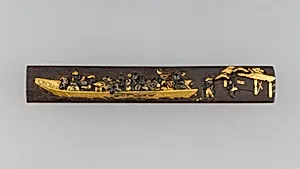
This exquisite 18th-century Japanese *kozuka*, or knife handle, is a prime example of the masterful sword fittings produced during the Edo period. Measuring just under 4 inches long, it served as the handle for a small utility knife (*kozukatana*) tucked into the scabbard of a samurai's sword. Far from mere utility, these fittings were status symbols, blending functionality with artistry in the hands of skilled metalworkers from schools like those in Edo or Kyoto. Crafted from iron inlaid with silver, gold, copper, and shakudō—a copper-gold alloy famed for its rich, dark patina achieved through chemical treatments—the *kozuka* showcases advanced Japanese metalworking techniques such as *zōgan* (inlay) and nuanced patination. Delicate scenes of human figures and boats, likely evoking serene river voyages or daily life, adorn its surface, transforming a weapon accessory into a miniature narrative canvas. Housed in the Metropolitan Museum of Art's Arms and Armor Department as part of The Howard Mansfield Collection (gift of 1936), this piece highlights Japan's cultural reverence for craftsmanship. In a peaceful era, samurai adorned their blades with such finery, reflecting aesthetic ideals like *wabi-sabi*—beauty in refined simplicity. Visitors, admire how it bridges war and art!