
Knife Handle (Kozuka)
Unknown Artist
19th century
Medium
Copper, gold, silver, copper-silver alloy (shibuichi), copper-gold alloy (shakudō)
Dimensions
L. 3 13/16 in. (9.7 cm); W. 9/16 in. (1.4 cm); thickness 3/16 in. (0.5 cm); Wt. 1.2 oz. (34 g)
Classification
Sword Furniture-Kozuka
Culture
Japanese
Department
Arms and Armor
Museum
Metropolitan Museum of Art, New York, NY
Credit
Gift of a Trustee of the Museum, 1917
Accession Number
17.208.44
Rights
Public Domain
Tags
Art Historical Context
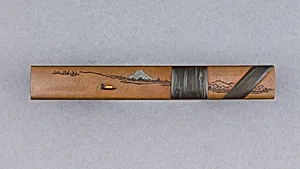
This exquisite *Kozuka*, or knife handle, is a fine example of 19th-century Japanese sword furniture the Arms and Armor tradition. Crafted for the small utility knife carried alongside a samurai's katana in the scabbard, it measures just under 4 inches long, perfectly sized for practicality and concealment. Dating to Japan's late Edo or early Meiji period, such fittings blended functionality with artistry, reflecting the samurai class's emphasis on refined craftsmanship even in weapons. The handle showcases masterful metalworking with copper, gold, silver, shibuichi (a copper-silver alloy with a subdued patina), and shakudō (a copper-gold alloy known for its dark, velvety black finish). Artisans likely employed techniques like inlaying or damascening to create a scenic motif of mountains and boats, evoking serene landscapes that symbolize harmony with nature—a common theme in Japanese decorative arts. These mixed alloys allowed for subtle color contrasts and enduring durability. Acquired as a gift to the Metropolitan Museum of Art in 1917, this *kozuka* highlights the cultural pinnacle of *koshirae* (sword mounting) artistry, where everyday arms became portable sculptures. Visitors will appreciate its delicate scale and the way it captures Japan's enduring fusion of beauty and utility.