
Knop (?)
c. 1100 - c. 1200
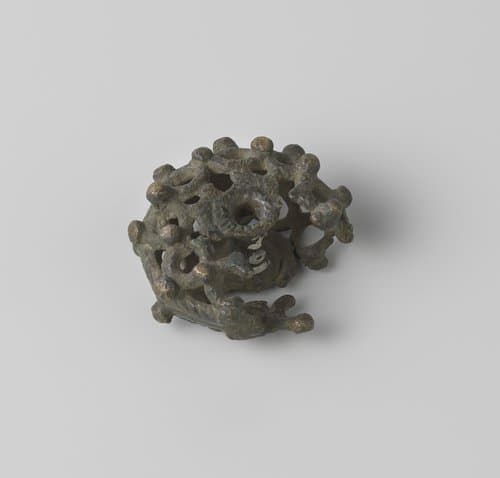
Medium
casting
Dimensions
2.2; 4.8
Rights
Public Domain
About this artwork
height 2.2 cm x diameter 4.8 cm
Art Historical Context
This delicate knop, dating to around 1100–1200, exemplifies the exquisite craftsmanship of anonymous medieval artisans. Measuring just 2.2 cm in height and 4.8 cm in, it was created through casting—a sophisticated lost-wax technique that allowed for intricate details in metal, often bronze or copper alloy. Such small-scale objects were prized for their precision, revealing the high level of metallurgical skill in the High Middle Ages. Knops like this typically served as decorative finials or bosses on larger items, such as croziers, chalices, or architectural elements in churches. Produced during a period of fervent religious devotion and Gothic architectural innovation, it reflects the era's blend of functionality and symbolism, where everyday religious artifacts became vessels for spiritual expression. Though its exact provenance remains uncertain, this piece highlights the enduring legacy of medieval metalwork workshops. These anonymous creators contributed to a rich tradition of portable art, bridging the Romanesque solidity of the 12th century with emerging Gothic elegance, inviting us to marvel at the artistry hidden in humble forms.
About the Artist
anonymous
In the vast tapestry of art history, "Anonymous" stands not as a singular individual but as a collective designation for countless unidentified creators whose works have endured across millennia. These artists, spanning prehistoric cave painters to medieval illuminators and folk craftsmen, produced the foundational layers of human visual culture. Prior to the Renaissance, when individual fame emer...