
Ko-Tze
Unknown Artist
late 19th century
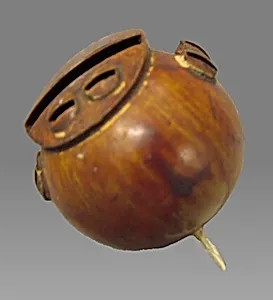
Medium
bamboo, gourd
Dimensions
Diam. 1-1/2 in.
Classification
Aerophone-Whistle Flute-whistle
Culture
Chinese
Department
Musical Instruments
Museum
Metropolitan Museum of Art, New York, NY
Credit
The Crosby Brown Collection of Musical Instruments, 1889
Accession Number
89.4.1685
Rights
Public Domain
Art Historical Context
This delicate Ko-Tze, a Chinese whistle flute from the late 19th century, exemplifies the elegant simplicity of traditional East Asian instrument-making. Crafted from bamboo and gourd, the small aerophone measures just 1.5 inches in diameter, suggesting it was designed for portability and perhaps intimate performances or signaling. Its classification as a whistle flute highlights the inventive use of natural materials, where the gourd likely forms a resonant chamber and bamboo provides the precise airway for sound production. In Chinese musical culture, such instruments reflect centuries-old practices that valued organic forms for their acoustic qualities and symbolic connection to nature. The Ko-Tze would have contributed to folk traditions or courtly ensembles, its clear, piercing tone adding texture to melodies. Though the maker remains unknown, the craftsmanship demonstrates skilled handwork in shaping and joining these humble materials. Acquired in 1889 as part of the Crosby Brown Collection, this piece now enriches the Metropolitan Museum’s holdings of musical instruments. It offers visitors a tangible link to late Qing-dynasty China, where even the smallest objects carried both artistic beauty and practical musical purpose.