
Ko-Tze
Unknown Artist
late 19th century
Medium
Gourd, wood
Dimensions
Diam. 3/4 in.
Classification
Aerophone-Whistle Flute-whistle
Culture
Chinese
Department
Musical Instruments
Museum
Metropolitan Museum of Art, New York, NY
Credit
The Crosby Brown Collection of Musical Instruments, 1889
Accession Number
89.4.1687
Rights
Public Domain
Art Historical Context
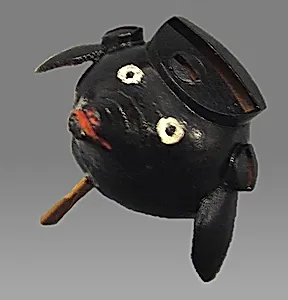
Ko-Tze is a charming late-19th-century Chinese whistle flute, classified as an aerophone and fashioned from gourd and wood. Barely three-quarters of an inch across, this miniature instrument demonstrates the skill of traditional makers who shaped humble natural materials into playable objects. Its compact form would have produced a clear, piercing tone when air was directed through the whistle mechanism, making it well suited for signaling or intimate musical moments. In Chinese musical traditions, gourd-based instruments have long held cultural resonance because the plant’s hollow shape naturally amplifies sound. Though the artist remains unknown, the piece reflects a practical artistry that valued both utility and elegant simplicity. Such whistles often appeared in folk or theatrical contexts, adding bright accents to larger ensembles. Acquired by the Metropolitan Museum of Art in 1889 through the Crosby Brown Collection, Ko-Tze offers today’s visitors a tangible link to the everyday sound world of late Qing-dynasty China.