
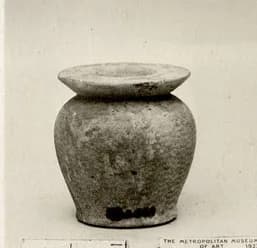
Kohl pot
Unknown Artist
ca. 1802–1640 B.C.
Medium
Travertine (Egyptian alabaster)
Dimensions
h. 3.8 cm (1 1/2 in)
Classification
Kohl jar
Period
Middle Kingdom
Department
Egyptian Art
Museum
Metropolitan Museum of Art, New York, NY
Credit
Rogers Fund and Edward S. Harkness Gift, 1922
Accession Number
22.1.246
Rights
Public Domain
Tags
Art Historical Context
This delicate kohl pot, dating to Egypt's Middle Kingdom (ca 1802–1640 B.C.) during Dynasty 13, exemplifies the everyday artistry of ancient Egyptian life. Standing just 3.8 cm tall it was crafted from travertine—known as Egyptian alabaster—a soft, translucent stone prized for its luminous quality and ease of carving. Acquired by The Metropolitan Museum of Art through Rogers Fund and Edward S Harkness Gift in 2, this small vessel belongs to the museum's renowned Egyptian Art collection. Kohl pots like this one held the black pigment used for eye makeup, a staple in ancient Egyptian culture for both men and women. Beyond enhancing beauty, kohl offered practical protection against the harsh desert sun and was believed to ward off the evil eye. During the Middle Kingdom, a time of renewed stability after the First Intermediate Period, such cosmetic containers reflected refined craftsmanship amid political shifts in Dynasty 13. The pot's simple, elegant form highlights masterful stoneworking techniques: hollowed interiors for storing pigment and a stopper-like design for preservation. These unassuming objects reveal the Egyptians' blend of utility and aesthetics, bridging personal ritual with enduring cultural reverence for beauty and hygiene.